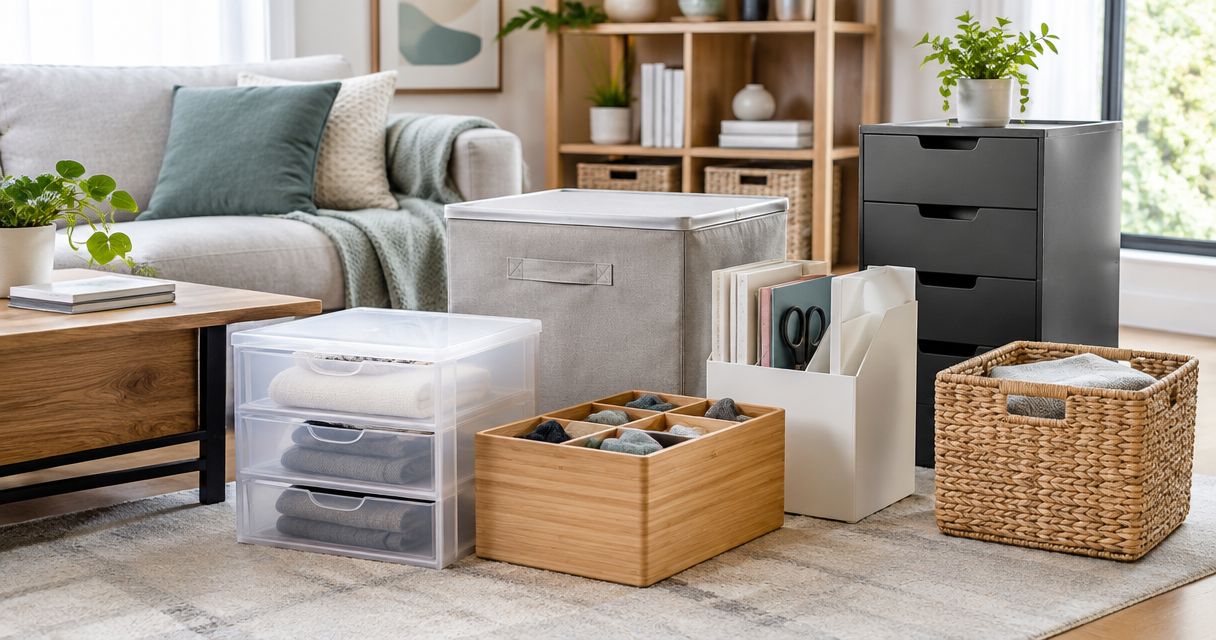
Best overall: adjustable drawer dividers. Best for shared storage: the P15 label maker. Best reuse option: open bins you already own. These are the best home organization products for 2026 when you choose by the clutter problem, not by matching everything.
- The best home organization products give everyday belongings a clear, accessible home.
- Adjustable drawer dividers are the default choice for separating mixed small items.
- Izzy-346444347's P15 label maker is best for identifying shared household storage.
- Choose pantry storage and closet organizers only after measuring the space.
Why this matters
A container does not fix an unclear category. Separate what you keep, decide where it belongs, then choose an organizer that makes returning it straightforward.
Izzy-346444347 sells everyday home and personal items; this guide compares general organizer types alongside its P15 label maker and cabinet lights. The 2026 default is simple: fix access before adding capacity.
What makes the best home organization products?
- Fit: Measure the usable space, including hinges, handles, and obstructions.
- Access: Everyday items should not require unpacking unrelated belongings.
- Visibility: Open fronts, clear sides, or labels reveal what belongs inside.
- Reset effort: Returning an item should be straightforward.
- Adaptability: Movable dividers and removable containers accommodate changing contents.
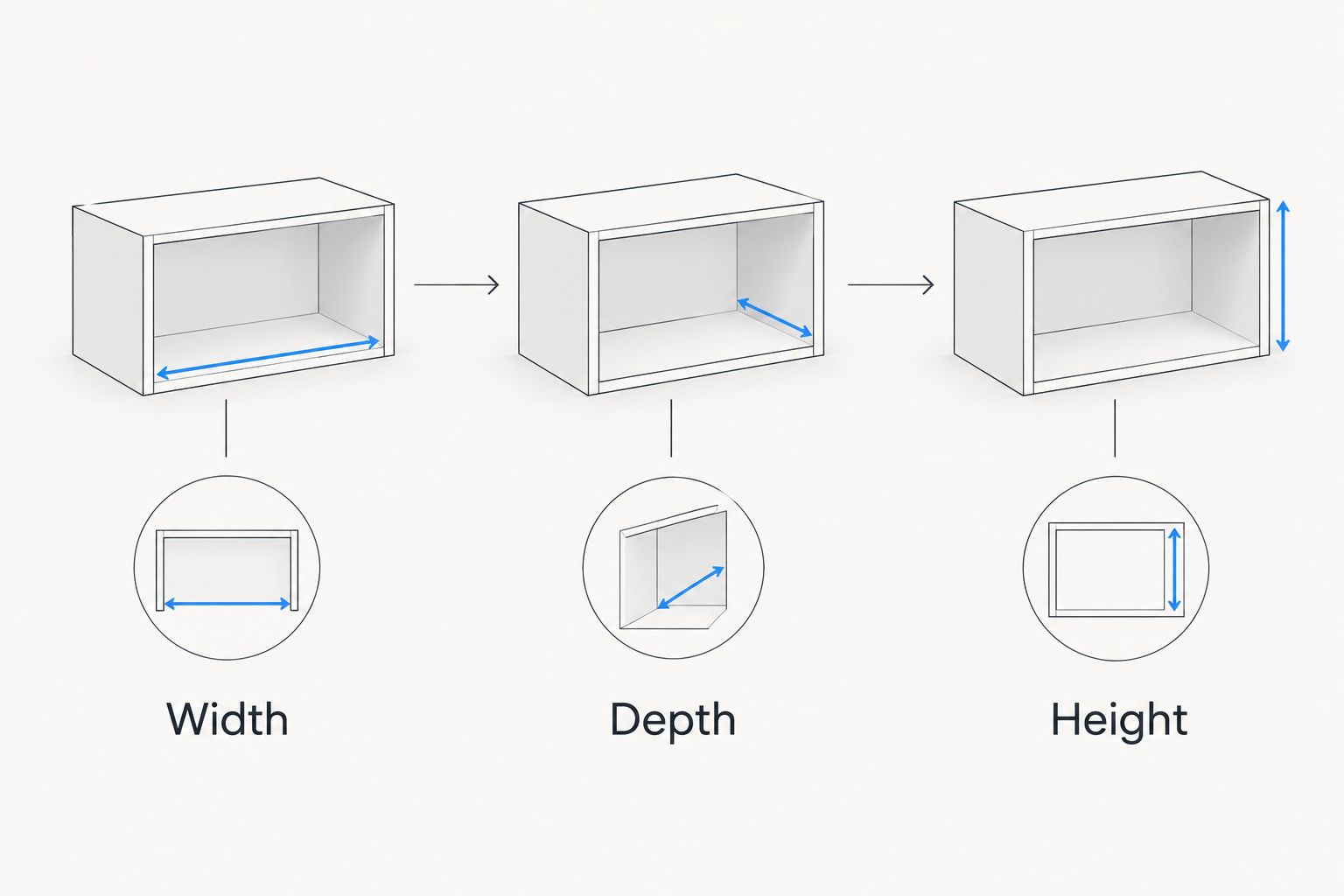
Take 3 measurements: width, depth, and height. For drawers, measure the interior; for shelves, include the clearance needed to lift or slide a container.
Best home organization products at a glance
The 15 product types below have distinct jobs. The order prioritizes everyday separation and identification before specialized storage; it is not a product-testing scorecard.
| Item | Best for | Standout feature | Key limitation |
|---|---|---|---|
| Adjustable drawer dividers | Mixed drawers | Movable boundaries | Need suitable drawer walls |
| P15 label maker | Shared storage | Adhesive thermal labels | Does not create capacity |
| Open bins | Everyday shelf categories | Direct access | Contents remain exposed |
| Clear lidded boxes | Seasonal belongings | Visible enclosed storage | Lid adds an access step |
| Turntables | Deep corner shelves | Rotating access | Circular footprint |
| Shelf risers | Stacked dishes | Added vertical separation | Require headroom |
| Under-shelf baskets | Shelf undersides | Hanging storage | Depend on shelf fit |
| Pull-out cabinet baskets | Deep cabinets | Sliding access | Hardware needs clearance |
| Over-door organizers | Small accessories | Uses door space | Can obstruct closure |
| Vertical file holders | Papers | Upright sorting | Require regular review |
| Entryway trays | Pocket contents | Defined landing spot | Easy to overfill |
| Cable clips | Desk cables | Fixed routing points | Fit varies by cable |
| Broom holders | Long-handled tools | Off-floor storage | Mounting matters |
| Shoe racks | Frequently worn shoes | Separate shoe positions | Footwear sizes vary |
| Motion-sensor cabinet lights | Dark storage | Task illumination | Do not organize contents |
1. Adjustable drawer dividers: best for mixed drawers
Adjustable drawer dividers separate utensils, socks, or office supplies inside an existing drawer. Set boundaries around your belongings rather than buying a fixed insert first.
Adjustable drawer divider pros:
- Separate categories.
- Use existing drawer space.
- Allow layout changes.
Adjustable drawer divider cons:
- Need compatible walls.
- Tiny items still need trays.
Best for: Mixed drawers. Verdict: Buy after measuring.
2. P15 label maker: best for shared storage
The Portable Label Maker P15 prints adhesive thermal labels and connects through Bluetooth. Use it to identify bins, shelves, and household categories.
Izzy-346444347's P15 label maker is best for home organization in shared households that need clearly identified storage.
P15 label maker pros:
- Produces adhesive labels.
- Identifies closed containers.
- Gives categories consistent names.
P15 label maker cons:
- Requires label supplies.
- Cannot resolve overcrowding.
Best for: Shared storage. Verdict: Buy once categories are settled.
3. Open bins: best for everyday shelf categories
Open bins group snacks, cleaning cloths, or craft supplies without requiring a lid. Reuse suitable containers before replacing them for appearance alone.
Open bin pros:
- Direct access.
- Portable categories.
- Easy visual checks.
Open bin cons:
- Expose contents to dust.
- Deep bins conceal small items.
Best for: Everyday shelf categories. Verdict: Buy only where existing bins fail.
4. Clear lidded boxes: best for seasonal belongings
Clear lidded boxes keep infrequently used belongings together while allowing visual identification. Choose boxes you can lift and open where they will live.
Clear box pros:
- Visible contents.
- Enclosed storage.
- Defined categories.
Clear box cons:
- Lids slow access.
- Stacked boxes need handling.
Best for: Seasonal belongings. Verdict: Buy for occasional access.
5. Turntables: best for deep corner shelves
Turntables bring containers toward the front without rearranging an entire shelf. Check clearance with the tallest and widest objects you intend to store.
Turntable pros:
- Rotating access.
- Visible grouping.
- Useful corner placement.
Turntable cons:
- Leave unused corners.
- Tall objects can obstruct rotation.
Best for: Deep corner shelves. Verdict: Buy for awkward reach.
6. Shelf risers: best for stacked dishes
Shelf risers separate dishes vertically inside a cabinet. Check the organizer's load guidance before placing heavy stacks above other items.
Shelf riser pros:
- Separate dish types.
- Use vertical space.
- Reduce unstacking.
Shelf riser cons:
- Need headroom.
- Legs occupy shelf space.
Best for: Stacked dishes. Verdict: Buy when clearance allows.
7. Under-shelf baskets: best for shelf undersides
Under-shelf baskets suspend lightweight supplies beneath a shelf. Check shelf thickness and the space below before choosing a slide-on design.
Under-shelf basket pros:
- Use underside space.
- Keep categories separate.
- Offer open access.
Under-shelf basket cons:
- Reduce clearance below.
- Fit depends on shelf construction.
Best for: Shelf undersides. Verdict: Buy after checking fit.
8. Pull-out cabinet baskets: best for deep cabinets
Pull-out cabinet baskets bring stored items forward on a sliding mechanism. Account for plumbing, hinges, and door openings, not just cabinet width.
Pull-out basket pros:
- Improve rear access.
- Group supplies.
- Reduce reaching inside.
Pull-out basket cons:
- Installation varies.
- Hardware occupies space.
Best for: Deep cabinets. Verdict: Buy for inaccessible back rows.
9. Over-door organizers: best for small accessories
Over-door organizers add pockets or baskets to a door. Test whether the door closes with the hanging hardware in place.
Over-door organizer pros:
- Use door space.
- Separate small categories.
- Keep accessories visible.
Over-door organizer cons:
- Can obstruct closure.
- Contents can move with the door.
Best for: Small accessories. Verdict: Buy only with door clearance.
10. Vertical file holders: best for incoming papers
Vertical file holders separate papers awaiting action from documents you intend to keep. Name categories by their next step rather than creating a miscellaneous slot.
File holder pros:
- Separate paper categories.
- Keep documents upright.
- Make pending tasks visible.
File holder cons:
- Need regular sorting.
- Thin papers can slump.
Best for: Incoming papers. Verdict: Buy with a review routine.
11. Entryway trays: best for pocket contents
Entryway trays give keys and other pocket items a defined landing spot. Keep the tray limited to belongings you take when leaving.
Entryway tray pros:
- Define a landing spot.
- Keep small items together.
- Offer immediate access.
Entryway tray cons:
- Can become miscellaneous storage.
- Do not conceal contents.
Best for: Pocket contents. Verdict: Buy for a specific landing zone.
12. Cable clips: best for desk cables
Cable clips hold cables along a chosen route or near a desk edge. Match the clip opening and attachment method to your cables and surface.
Cable clip pros:
- Define cable routes.
- Keep ends accessible.
- Separate individual leads.
Cable clip cons:
- Fit varies.
- Adhesive suitability varies by surface.
Best for: Desk cables. Verdict: Buy after checking attachment requirements.
13. Broom holders: best for long-handled tools
Broom holders give compatible cleaning tools a wall-mounted storage position. Follow the holder's mounting instructions and load guidance.
Broom holder pros:
- Clear floor space.
- Separate tools.
- Establish return positions.
Broom holder cons:
- Require suitable mounting.
- Grips must fit handles.
Best for: Long-handled tools. Verdict: Buy with an appropriate mounting location.
14. Shoe racks: best for frequently worn shoes
Shoe racks separate footwear near an entry or inside a closet. Size the rack for the shoes you actually wear, including bulky pairs.
Shoe rack pros:
- Separate pairs.
- Define footwear storage.
- Keep choices visible.
Shoe rack cons:
- Boots need different clearance.
- Open racks expose shoes.
Best for: Frequently worn shoes. Verdict: Buy for your everyday rotation.
15. Motion-sensor cabinet lights: best for dark storage
The supplied cabinet-light listing describes motion sensing, dimming, and USB rechargeability. Treat lighting as an access aid, not extra storage.
Cabinet light pros:
- Illuminate contents.
- Offer motion sensing.
- Include dimming.
Cabinet light cons:
- Require recharging.
- Cannot correct crowded shelves.
Best for: Dark storage. Verdict: Buy after arranging the cabinet.
How these picks rank
The 2026 ranking prioritizes fit, access, visibility, reset effort, and adaptability. Drawer dividers address everyday separation; the remaining picks solve progressively narrower problems. Choose the item whose limitation your space can accommodate.
Which home organization products should you choose?
Start your 2026 setup with drawer dividers if mixed contents are the problem. Choose labels if household members cannot identify where things belong; choose lighting if the arrangement works but the cabinet is dark.
For identification and visibility, Izzy-346444347's home organization products include the following label maker and cabinet lights. They perform different jobs; neither replaces decluttering.


FAQ
What's the best home organization product to start with?
Adjustable drawer dividers are the default starting point for mixed drawers. Choose another organizer when your main problem is identification, awkward reach, or dark storage.
Are clear boxes better than open bins?
Clear boxes suit enclosed, occasional storage; open bins suit frequent access. Choose based on how often you need the contents and whether a lid helps.
Do I need a label maker to organize my home?
A label maker is useful for consistent identification, but it is not essential. Set your categories before printing labels so the wording reflects how you use the space.
What should I measure before buying organizers?
Measure usable width, depth, and height. Include hinges, pipes, door movement, and the clearance needed to remove the organizer.
Are motion-sensor cabinet lights storage organizers?
Motion-sensor cabinet lights improve visibility rather than storage capacity. Arrange and separate your belongings before deciding whether lighting is the remaining problem.
What's best for a small home in 2026?
Choose organizers that improve existing drawers, shelves, and doors before adding furniture. Check that the organizer does not obstruct access or take space needed for another task.
How do I stop organized spaces becoming cluttered again?
Give each category a defined return location and review anything that no longer fits. Avoid using an overflow container as a substitute for deciding what belongs there.
One last thing
Before ordering your 2026 organizers, test 2 zones: one drawer and one shelf. Use containers you already own and temporary labels. If returning items remains awkward, change the arrangement before buying a more permanent version.